
Is Tallow Good for Acne-Prone Skin?
If you’re dealing with acne-prone skin and want a natural solution, tallow might be worth considering. Tallow, rendered from beef fat, closely resembles the natural oils your skin produces, making it a potential ally for hydration, healing, and reducing inflammation. Packed with vitamins A, D, E, and K, as well as anti-inflammatory compounds like CLA, tallow may help calm redness, repair skin, and regulate oil production. However, it’s not for everyone - its moderate comedogenic rating (2-3) means it could clog pores for some, especially those with oily or sensitive skin. Always patch test before use, and opt for high-quality, grass-fed tallow products for the best results.
Tallow skincare for acne prone skin
sbb-itb-2185835
What Is Tallow and Why Use It in Skincare?
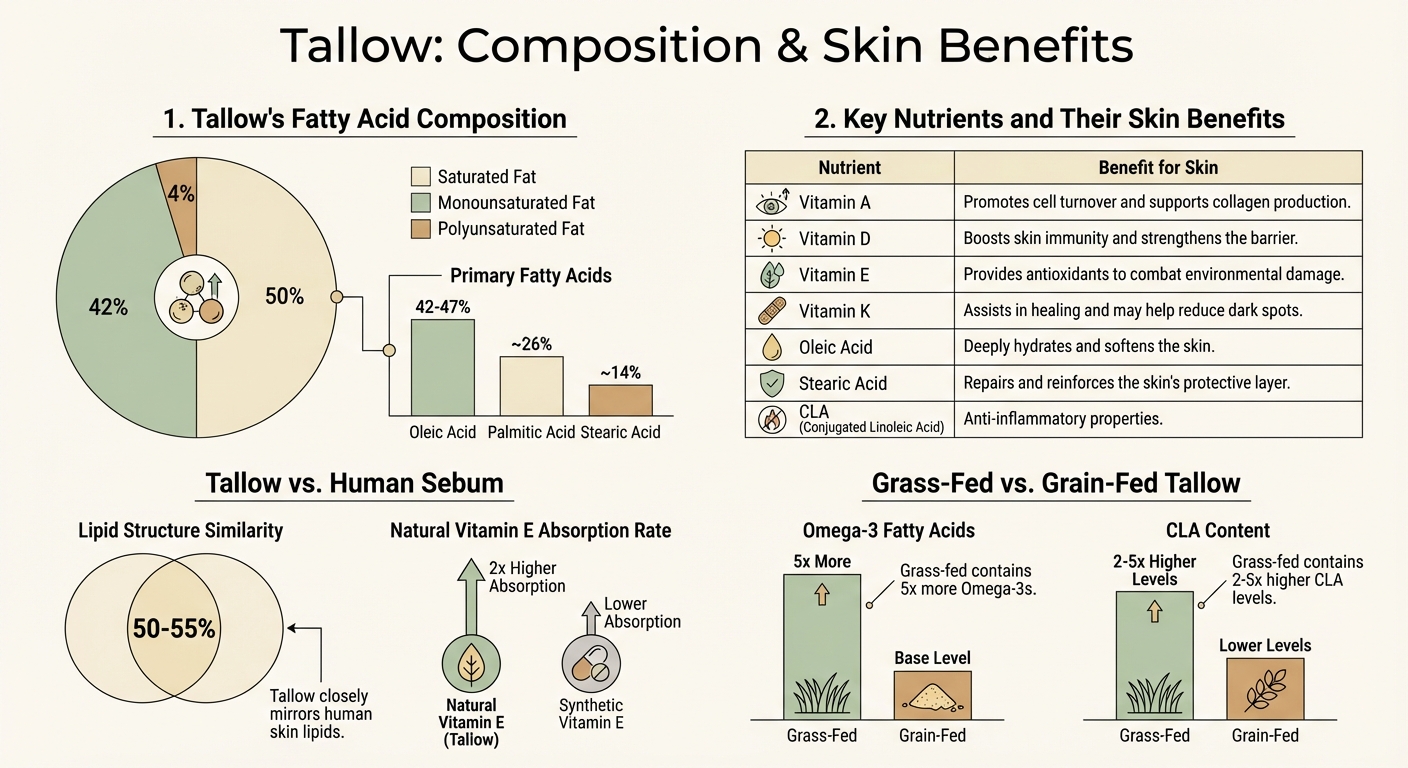
Tallow Composition and Skin Benefits: Complete Nutrient Breakdown
Tallow is rendered beef fat, specifically taken from suet, which is the fat found around the kidneys and loins. Through a slow heating process, impurities are removed, leaving behind a nutrient-rich, semi-solid substance that stays stable at room temperature. But what makes tallow so appealing for skincare? Its nutrient profile and compatibility with your skin's natural oils make it a standout ingredient.
Tallow's composition closely resembles your skin's natural lipids, allowing it to integrate seamlessly with your skin barrier. This means it doesn't just sit on the surface - it works with your skin to support repair and nourishment.
Tallow's Composition and Nutrients
Grass-fed beef tallow offers an impressive balance of fats: about 50% saturated fat, 42% monounsaturated fat, and 4% polyunsaturated fat. Its primary fatty acids include oleic acid (42%–47%), palmitic acid (around 26%), and stearic acid (roughly 14%).
Beyond its fatty acids, tallow is packed with fat-soluble vitamins like A, D, E, and K, which your skin readily absorbs. It also contains conjugated linoleic acid (CLA), prized for its anti-inflammatory properties. Together, these elements help rejuvenate skin cells, strengthen the barrier, and protect against environmental stressors.
| Nutrient | Benefit for Skin |
|---|---|
| Vitamin A | Promotes cell turnover and supports collagen production |
| Vitamin D | Boosts skin immunity and strengthens the barrier |
| Vitamin E | Provides antioxidants to combat environmental damage |
| Vitamin K | Assists in healing and may help reduce dark spots |
| Oleic Acid | Deeply hydrates and softens the skin |
| Stearic Acid | Repairs and reinforces the skin's protective layer |
This nutrient-dense profile, combined with tallow's similarity to natural sebum, makes it an excellent choice for skincare.
How Tallow Matches Your Skin's Natural Oils
Tallow's lipid structure is estimated to be 50–55% similar to human sebum. This means your skin recognizes it as a natural ally rather than a foreign substance. Dr. E. Victor Ross, a board-certified dermatologist, explains:
"Tallow is mostly made of fatty acids found in the skin's natural barrier. That similarity is why some people believe it can help moisturize dry skin."
This compatibility strengthens the skin barrier and minimizes the risk of irritation often caused by synthetic ingredients. Additionally, the natural vitamin E in tallow is absorbed by skin tissues at nearly double the rate of synthetic versions. For optimal results, sourcing matters - grass-fed tallow contains significantly higher levels of omega-3 fatty acids and CLA compared to grain-fed tallow. These added benefits make it especially suitable for sensitive or reactive skin, offering enhanced nourishment and anti-inflammatory support.
How Tallow Helps Acne-Prone Skin
Acne-prone skin requires hydration, soothing care, and support for healing - all without the harsh effects of heavy chemicals. Tallow stands out as a natural solution, offering anti-inflammatory compounds, essential vitamins, and lipids that closely mimic your skin's own oils. Let’s dive into how these properties can directly benefit acne-prone skin.
Calming Inflammation and Redness
Acne often brings redness and swelling, both of which are signs of inflammation. Thanks to its similarity to natural sebum, tallow contains conjugated linoleic acid (CLA), which can help calm irritated skin. Interestingly, grass-fed tallow contains up to five times more CLA than grain-fed alternatives, making it an even better option for soothing inflamed skin. Additionally, fat-soluble vitamins like Vitamin K2 and Vitamin E work together to promote healing and ease irritation. On top of that, antimicrobial fatty acids such as palmitic and stearic acids help maintain a healthy skin barrier.
Regulating Oil Production
One of the biggest challenges for acne-prone skin is managing excess oil. Many cleansers strip the skin of its natural moisture, which can lead to overcompensation in oil production. Tallow, with its close resemblance to the skin's natural sebum, sends a signal that the skin is already moisturized, potentially reducing this overproduction. A small amount - about the size of a pea - is usually enough. However, its high oleic acid content (42–47%) might feel too heavy for those with very oily or sensitive skin. Dr. E. Victor Ross from the Scripps Clinic offers a word of caution:
"For people with really dry skin and no history of breakouts, a small amount may be tolerated. However, those with acne-prone skin, oily skin or sensitive skin should be careful as they are more likely to experience pore clogging or breakouts."
To minimize risks, opt for high-quality, triple-rendered or purified grass-fed tallow, as it reduces impurities that might clog pores. If you have combination skin, you might find it helpful to apply tallow only to drier areas and avoid more congested zones.
Supporting Skin Healing and Repair
Acne doesn’t just cause breakouts - it can leave behind scars and weaken your skin’s natural barrier. Tallow’s nutrient-rich profile helps with both repair and recovery. Its natural Vitamin A acts as a true retinol, promoting cell turnover and reducing the appearance of scars. Vitamin D supports skin cell growth and repair, while Vitamin E provides antioxidant protection against sebum oxidation. Meanwhile, Vitamin K2 speeds up healing and helps fade post-acne redness.
Here’s a quick look at key nutrients in tallow and their benefits for acne-prone skin:
| Nutrient | How It Helps Acne-Prone Skin |
|---|---|
| Vitamin A | Boosts cell turnover and supports collagen production |
| Vitamin D | Reduces inflammation and strengthens the skin’s defenses |
| Vitamin E | Protects against sebum oxidation with antioxidant properties |
| Vitamin K2 | Speeds up healing and reduces redness after breakouts |
| CLA | Delivers strong anti-inflammatory effects |
| Palmitic Acid | Helps fight acne-causing bacteria with antimicrobial properties |
Studies show that lipid-rich moisturizers can improve skin barrier function by 73% within four weeks, and roughly 70% of users report clearer skin after a few weeks of using tallow-based products. It’s worth noting that your skin may go through a 3–4 week adjustment period as it balances its natural oil production when transitioning to tallow. Over time, tallow doesn’t just help manage acne - it supports overall skin health, creating a foundation for long-term care.
How to Use Tallow for Acne-Prone Skin
Tallow's nutrient-rich profile and skin-friendly properties make it a great addition to your skincare routine - if used correctly. The key lies in choosing high-quality tallow, applying it properly, and testing for safety. When approached thoughtfully, tallow can provide gentle, nourishing care for acne-prone skin.
Selecting Quality Tallow Products
Not all tallow products are equal, and for acne-prone skin, quality is crucial. Look for tallow made from 100% grass-fed, pasture-raised sources. Tallow derived from suet is particularly rich in fatty acids and vitamins, offering enhanced benefits for your skin.
Processing methods also matter. Products made with low-temperature wet rendering (below 200°F) retain more heat-sensitive vitamins like A and E. Terms like "triple-rendered" or "purified" indicate that impurities have been filtered out, reducing the risk of clogged pores. Avoid tallow products that include synthetic fragrances, dyes, or heavy seed oils, as these ingredients can irritate acne-prone skin or trigger breakouts.
Application Methods for Best Results
When it comes to applying tallow, a little goes a long way. Start with a pea-sized amount, as tallow is highly concentrated. Warm it between your fingers until it melts, then gently massage it into your skin using circular motions.
Timing matters, too. Apply tallow to clean, slightly damp skin right after cleansing to help seal in moisture and improve absorption. For most people, once-a-day application at night works well, but if your skin tolerates it, you can increase to twice daily. If a full-face application feels too heavy, use tallow as a spot treatment for dry patches or areas needing extra hydration.
Keep in mind that your skin may take three to four weeks to adjust when transitioning from synthetic products to tallow. During this period, your skin recalibrates its natural oil production. Be patient and allow time for results to appear. Before applying tallow to your entire face, always start with a patch test to ensure your skin tolerates it.
Patch Testing and Safety Steps
To avoid unwanted reactions, start with a patch test. Apply a small amount of tallow to your wrist or behind your ear and wait 24 to 48 hours. If you notice redness, itching, or bumps, it’s a sign that the product may not suit your skin.
Since many natural tallow products lack synthetic preservatives, hygiene is essential. Always wash your hands before scooping out product to prevent contamination. Store tallow in a cool, dry place to maintain its stability and prevent oxidation. If you experience persistent cystic breakouts or hives beyond the initial adjustment period, stop using the product and consult a dermatologist.
Things to Consider When Using Tallow for Acne
Tallow might work wonders for some, but its impact depends heavily on your skin type. To make the most of its nutrient-rich properties, it’s essential to consider a few key factors before incorporating it into your skincare routine.
Does Tallow Clog Pores?
One of the first questions to ask is whether tallow might clog your pores. On the comedogenic scale of 0 to 5, tallow scores a 2 to 3, meaning it has a moderately low to moderate chance of causing pore blockages. For comparison, coconut oil sits at a 4, while argan oil and shea butter score a 0. This makes tallow a middle-ground option - great for some, but potentially problematic for others.
The issue lies in its oleic acid content, which makes up 42%–47% of tallow. Acne-prone skin often has a natural deficiency in linoleic acid, so introducing more oleic acid can upset the skin’s balance. This imbalance might also disrupt the skin’s calcium gradient, which can increase water loss and sensitivity.
"For people with really dry skin and no history of breakouts, a small amount may be tolerated. However, those with acne-prone skin, oily skin or sensitive skin should be careful as they are more likely to experience pore clogging or breakouts." - E. Victor Ross, MD, Director of Laser and Cosmetic Dermatology, Scripps Clinic
If your skin is oily, combination, or sensitive - or if you’ve dealt with cystic acne before - it’s best to approach tallow cautiously. You might want to limit its use to dry areas like your elbows or knees instead of applying it to your face. Alternatively, try using it as a spot treatment rather than an all-over moisturizer. Beyond clogging concerns, keep an eye out for other signs of irritation.
Watching for Sensitivity and Reactions
Another important consideration is how your skin reacts to tallow. Be on the lookout for immediate signs of sensitivity, such as stinging, burning, or itching, as well as visible symptoms like redness, hives, or bumps.
Monitor your skin for pore congestion, too. If blackheads, whiteheads, or painful cystic breakouts appear and don’t clear up quickly, tallow might not be the best option for you. While minor breakouts during the first three to four weeks can be part of an adjustment phase, persistent or worsening inflammation is a signal to stop using it.
Always patch test on a small area of skin before applying tallow more broadly. If irritation occurs, discontinue use and consult a board-certified dermatologist, especially if you have conditions like rosacea or a history of cystic acne. Additionally, since tallow products typically lack synthetic preservatives, make sure to use clean hands and store them properly to avoid contamination.
Conclusion
Tallow provides a natural option for those dealing with acne-prone skin. With a bioidentical lipid profile of 50–55%, it works harmoniously with your skin's natural oils. Its rich content of CLA and vitamins A, D, E, and K contributes to calming inflammation and supporting the skin's barrier. As discussed earlier, tallow can help reduce redness, soothe irritation, and regulate oil production when used correctly.
The quality of the tallow you choose is key. Grass-fed tallow is particularly beneficial, offering up to 5× more Omega-3 fatty acids and 2–5× higher CLA levels compared to grain-fed options. Opt for triple-rendered, suet-based, grass-fed tallow to ensure maximum skin benefits while minimizing the risk of clogged pores.
Keep in mind that tallow's effects can vary depending on your skin type. While 70% of users noticed clearer skin within weeks of use, results may differ. For those with oily or cystic acne-prone skin, it’s best to apply tallow sparingly to dry areas or limit it to nighttime use.
If you're ready to try this natural skincare solution, join the waitlist for our upcoming tallow skincare line at Pure Skin Tallow. Our products are crafted from 100% grass-fed, pasture-raised tallow, focusing on purity and simplicity - free from synthetic additives and chemical preservatives. Your skin deserves this kind of care.
FAQs
Can tallow cause purging or just breakouts?
Tallow might lead to purging or breakouts, especially if your skin is sensitive or prone to clogged pores. Although it closely resembles the skin's natural oils, it can be comedogenic for some, potentially trapping oil and debris, which may result in temporary purging or blemishes. To avoid issues, always perform a patch test before adding tallow to your skincare routine to check how your skin reacts.
Which acne types do best with tallow?
Tallow works well for dry, sensitive, or damaged skin thanks to its rich nutrients - like vitamins A, D, E, and K - and its close resemblance to human sebum, which helps replenish moisture and soothe irritation. However, if you have oily or acne-prone skin, you may want to approach it carefully since tallow has a moderate chance of clogging pores. It's a good idea to do a patch test first to check your skin's reaction, and speaking with a dermatologist can offer tailored advice.
Can I use tallow with acne treatments?
Using tallow alongside acne treatments can vary in effectiveness depending on your skin type and the specific treatments you're using. Grass-fed beef tallow is rich in vitamins A, D, E, and K, which might help soothe inflammation and strengthen the skin's barrier. However, since it has a moderate comedogenic rating, there's a chance it could clog pores for some individuals. To be safe, always do a patch test first. If you're on strong acne medications, consult a dermatologist to ensure it won't cause irritation or interfere with your treatment.