
How to Switch to Natural Skincare: A Simple Guide
Switching to natural skincare is easier than you think. Start by reviewing your current products and identifying synthetic ingredients like parabens, sulfates, and artificial fragrances that may harm your skin. Replace them gradually with natural alternatives, such as tallow-based products, which closely mimic your skin's natural oils and deliver essential nutrients like vitamins A, D, E, and K. Stick to your new routine for 4–6 weeks to see meaningful changes, including improved hydration, reduced sensitivity, and a stronger skin barrier. Here's how to get started:
- Step 1: Review your products for harmful ingredients like parabens and sulfates.
- Step 2: Replace one product at a time with natural options, starting with moisturizers or creams.
- Step 3: Stick with your new routine, allowing for a short adjustment phase.
Tallow-based skincare offers a simple, effective way to nourish your skin without synthetic additives. Apply it to clean, damp skin for optimal results, and enjoy its multitasking benefits as a moisturizer, balm, or spot treatment.
My All-Natural Skincare Routine as a Licensed Esthetician
sbb-itb-2185835
Step 1: Review Your Current Skincare Products
Before diving into natural skincare, take a closer look at what you’re already using. Grab those bottles from your bathroom shelf and read the full ingredient list - not just the buzzwords on the front. Long, complicated lists might be hiding synthetic fillers, preservatives, or unnecessary chemicals.
Ingredients to Avoid in Your Skincare
Here’s a quick guide to some ingredients that could be throwing your skin off balance:
| Ingredient Category | Common Names | Why to Avoid |
|---|---|---|
| Preservatives | Parabens, Phenoxyethanol, BHT | May disrupt hormones and irritate skin |
| Surfactants | Sodium Lauryl Sulfate (SLS) | Strips natural oils, leaving skin tight |
| Silicones | Dimethicone | Offers surface smoothness without real benefits |
| Petroleum | Mineral oil, Petrolatum | Can block pores and weaken the skin barrier |
| Fragrance | Fragrance, Parfum | Often contains undisclosed, harmful chemicals |
Preservatives like parabens (e.g., methylparaben or propylparaben) and BHT are common in skincare to prolong shelf life but may irritate sensitive skin or interfere with hormones. Sulfates such as Sodium Lauryl Sulfate (SLS) are aggressive cleansers that can strip away your skin’s protective moisture barrier, leaving it vulnerable. "Fragrance" or "parfum" might sound harmless, but it’s often a catch-all for unlisted chemicals that could irritate or disrupt your skin. Petroleum-based ingredients like mineral oil or petrolatum, while common, tend to sit on the skin instead of nourishing it. Even water-based products, though seemingly hydrating, often rely on chemical preservatives and can dilute the potency of active ingredients.
How to Tell If Your Products Are Causing Problems
Once you’ve identified questionable ingredients, pay attention to how your skin reacts. It’s your best indicator of whether a product is helping or harming. For instance, if your skin feels tight or overly clean after washing, your cleanser might contain sulfates that are damaging your skin’s protective barrier. Products that leave a greasy film or don’t absorb well could be loaded with synthetic fillers or petroleum-based ingredients that don’t align with your skin’s needs.
"Cleansing should never leave your skin feeling tight. That tightness = barrier damage." - Maloney Healing
Other warning signs include recurring breakouts, redness, sensitivity, dullness, or unusual dryness or oiliness. While water-based products may feel refreshing at first, they often evaporate quickly, leaving your skin even drier. Similarly, if a product requires heavy rubbing or leaves a residue, it’s likely disrupting your skin’s natural structure.
Step 2: Make the Switch to Natural Products
Now that you’ve assessed your current skincare routine, it’s time to transition to a natural approach. By identifying products with harmful ingredients, you can gradually replace them with safer, more skin-friendly alternatives. Take it slow - this gives your skin time to adapt.
Replace One Product at a Time
Begin with the product that has the most prolonged contact with your skin, like your night cream or daily moisturizer. These items interact directly with your skin barrier for extended periods, making them the ideal starting point . Swap it out for a tallow-based alternative and observe any changes over 2–4 weeks before introducing another replacement. This step-by-step process allows your skin's natural oil balance to adjust while helping you evaluate the performance of each new product.
Pay special attention to items with long ingredient lists filled with synthetic fillers. Unlike these, grass-fed tallow balms are free of water and typically require few or no preservatives. Once you’ve tackled the basics, select tallow products that suit your specific skin type.
How to Choose Tallow Products for Your Skin Type
When shopping for tallow products, prioritize 100% grass-fed and grass-finished options. Grass-fed tallow mirrors your skin’s natural chemistry and is packed with nutrients like Vitamin E and omega-3 fatty acids. In fact, grass-fed tallow can contain up to four times more Vitamin E compared to grain-fed versions. Look for products with simple, recognizable ingredients - usually just tallow and perhaps a touch of beeswax or a complementary oil.
| Skin Type | What to Look For | Why It Works |
|---|---|---|
| Dry / Mature | Tallow + honey, rosehip oil, or shea butter | Provides deep hydration and improves elasticity |
| Oily / Acne-Prone | Tallow + jojoba oil or tea tree | Balances sebum without clogging pores |
| Sensitive | Pure, unscented tallow with minimal additives | Soothes redness and strengthens the skin barrier |
| Combination | Tallow + lightweight oils like jojoba | Moisturizes dry areas without adding excess oil |
Tallow’s molecular structure is nearly identical to human sebum, enabling it to penetrate deeply into the skin rather than sitting on the surface . With a comedogenic rating of around 2 - similar to jojoba oil - it’s unlikely to clog pores for most people .
How to Use Tallow Products Daily
To get the most out of your tallow products, apply them to clean, slightly damp skin. This helps lock in moisture by mimicking your skin’s natural barrier function. A pea-sized amount is usually enough for your entire face since tallow’s concentrated formula (free of water and fillers) means you don’t need much. Warm the balm between your fingertips before gently pressing it into your skin.
If you’re using a water-based serum or humectant, apply it first, then follow up with your tallow balm to seal in hydration. Research shows that occlusive agents like tallow can increase skin moisture levels by up to 30% when layered over humectants. Beyond your face, tallow balm can also be used for targeted needs - whether it’s soothing dry elbows, calming eczema, or even as a gentle makeup remover .
Step 3: Stick with Your New Routine
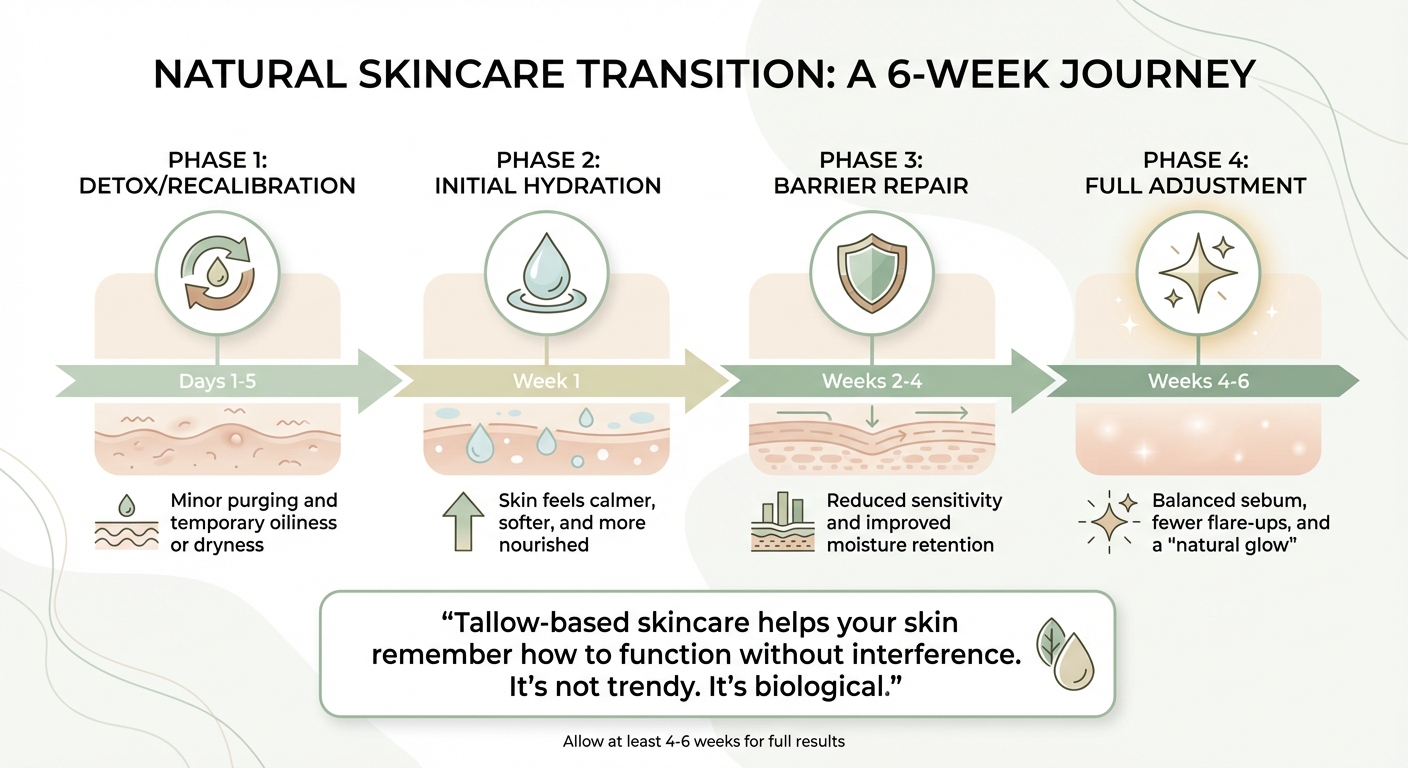
Natural Skincare Transition Timeline: What to Expect in Your First 6 Weeks
Switching to natural skincare takes time and dedication. If you’ve been using synthetic products for years, your skin might need a few weeks to adjust to tallow-based alternatives. But with regular use, you could see noticeable benefits within the first month.
Monitor Your Skin's Changes
During the first week, you might notice your skin feeling calmer, softer, and more nourished. Tallow’s fatty acids work well with your skin, allowing for deeper absorption. By weeks 4–6, you could experience less dryness, fewer flare-ups, and a more balanced T-zone. Many users also report a smoother texture and what’s often called a "natural glow" as their skin barrier becomes stronger.
What to Expect During the Adjustment Period
As your skin transitions, you might go through a short "detox" phase, typically lasting 3–5 days. This can include minor purging or temporary changes in oiliness or dryness as your pores clear and your skin adjusts. Think of it as your skin resetting after years of synthetic product use.
"Tallow-based skincare helps your skin remember how to function without interference. It's not trendy. It's biological." – stoneymaloney.com
| Phase | Timeline | What to Expect |
|---|---|---|
| Detox/Recalibration | Days 1–5 | Minor purging and temporary oiliness or dryness |
| Initial Hydration | Week 1 | Skin feels calmer, softer, and more nourished |
| Barrier Repair | Weeks 2–4 | Reduced sensitivity and improved moisture retention |
| Full Adjustment | Weeks 4–6 | Balanced sebum, fewer flare-ups, and a "natural glow" |
During this adjustment phase, avoid introducing strong active ingredients like AHAs, BHAs, or retinoids. These can put extra stress on your skin, which needs time to stabilize naturally.
Once your skin adjusts, sticking to a consistent routine will help you get the most out of tallow-based care.
How to Maintain Your Natural Skincare Routine
After the initial improvements, maintaining a simple and steady routine will strengthen your skin’s natural barrier. Regular application and layering techniques can amplify tallow’s benefits. Use a pea-sized amount of tallow balm twice daily on clean, slightly damp skin to lock in moisture. Warming the balm between your fingertips ensures even application across your face.
The beauty of tallow-based skincare is its simplicity. The same product can double as a facial moisturizer, lip balm, or even a spot treatment for dry areas. This minimalist approach keeps your routine manageable and reduces the risk of overwhelming your skin with too many ingredients.
If you’re using water-based serums like Vitamin C or Hyaluronic Acid, apply them first on damp skin. Then, follow with your tallow balm to seal in hydration. This layering method has been shown to boost skin hydration by up to 30%.
Allow at least 4–6 weeks for your routine to show its full effects. Your skin needs time to fully adapt, but with patience, you could see lasting improvements in texture, tone, and overall resilience.
Conclusion
Switching from synthetic skincare products to natural, nutrient-rich tallow is a straightforward process with lasting benefits. By eliminating synthetic ingredients, opting for skin-friendly alternatives, and giving your skin time to adapt, you’re paving the way for healthier skin. These natural products work seamlessly with your skin's biology.
This harmony promotes better absorption, improved moisture retention, and a stronger lipid barrier - all without relying on artificial additives. Your skin stays balanced without the need for chemical preservatives or fillers.
What’s more, tallow’s simplicity is a game-changer. A single product can serve as your moisturizer, night cream, lip balm, and even a spot treatment. Grass-fed tallow is packed with vitamins A, D, E, and K in forms your body can easily use, along with anti-inflammatory CLA and antimicrobial palmitoleic acid to help repair and protect your skin.
With consistent use over 4–6 weeks, you might notice balanced oil production, less sensitivity, and a natural, healthy glow as your skin barrier becomes stronger. It’s all about giving your skin the nourishment it instinctively recognizes.
Join the Waitlist for Pure Skin Tallow
Excited to simplify your skincare routine? If these benefits resonate with you, join the waitlist for our upcoming Pure Skin Tallow launch. Be the first to access this natural skincare solution, receive exclusive updates, and get practical tips for making the transition to tallow-based products.
FAQs
Can tallow balm clog pores or cause acne?
Tallow balm is generally gentle on the skin and unlikely to clog pores or trigger acne. Its composition is similar to the skin's natural oils, which helps maintain a healthy barrier. When sourced from high-quality, grass-fed tallow, it’s typically non-comedogenic. This means it nourishes the skin without blocking pores, making it suitable for a variety of skin types.
How can I tell if a grass-fed tallow moisturizer is truly pure?
When choosing a grass-fed tallow moisturizer, focus on products made from grass-fed, pasture-raised animals. Opt for those that undergo minimal processing and avoid additives, synthetic fillers, or artificial fragrances. Trustworthy brands usually share clear information about their sourcing and ingredient standards. Certifications such as USDA Organic or Fair Trade can also indicate high quality and responsible practices.
Can I use a tallow balm for face and body in one routine?
Tallow balm works well for both your face and body, making it a versatile addition to your skincare routine. Its nutrient-dense, natural formula closely resembles the skin's own oils, which makes it a great option for a range of skin types - especially dry or sensitive skin. By using one product for multiple purposes, you can streamline your routine while delivering deep hydration and nourishment, perfect for those who prefer a simple, no-fuss approach to skincare.