
5 Natural Ingredients That Heal Eczema
Eczema impacts around 31.6 million people in the U.S., causing dryness, itching, and inflammation. Natural remedies can offer relief by soothing and hydrating sensitive skin without harsh chemicals. Here are five effective, natural ingredients for managing eczema:
- Aloe Vera: Hydrates, reduces itching, and promotes healing with antibacterial benefits. Apply to damp skin 2–4 times daily.
- Coconut Oil: Locks in moisture, reduces inflammation, and protects the skin. Use organic, extra-virgin oil after bathing.
- Colloidal Oatmeal: Calms redness and itching while forming a protective barrier. Add to baths or apply as a paste.
- Manuka Honey: Antimicrobial and soothing, it repairs the skin barrier. Use medical-grade honey on clean skin.
- Shea Butter: Moisturizes deeply and strengthens the skin barrier. Apply raw shea butter after bathing.
For best results, patch test new products, avoid fragrances, and consult a dermatologist for severe symptoms.
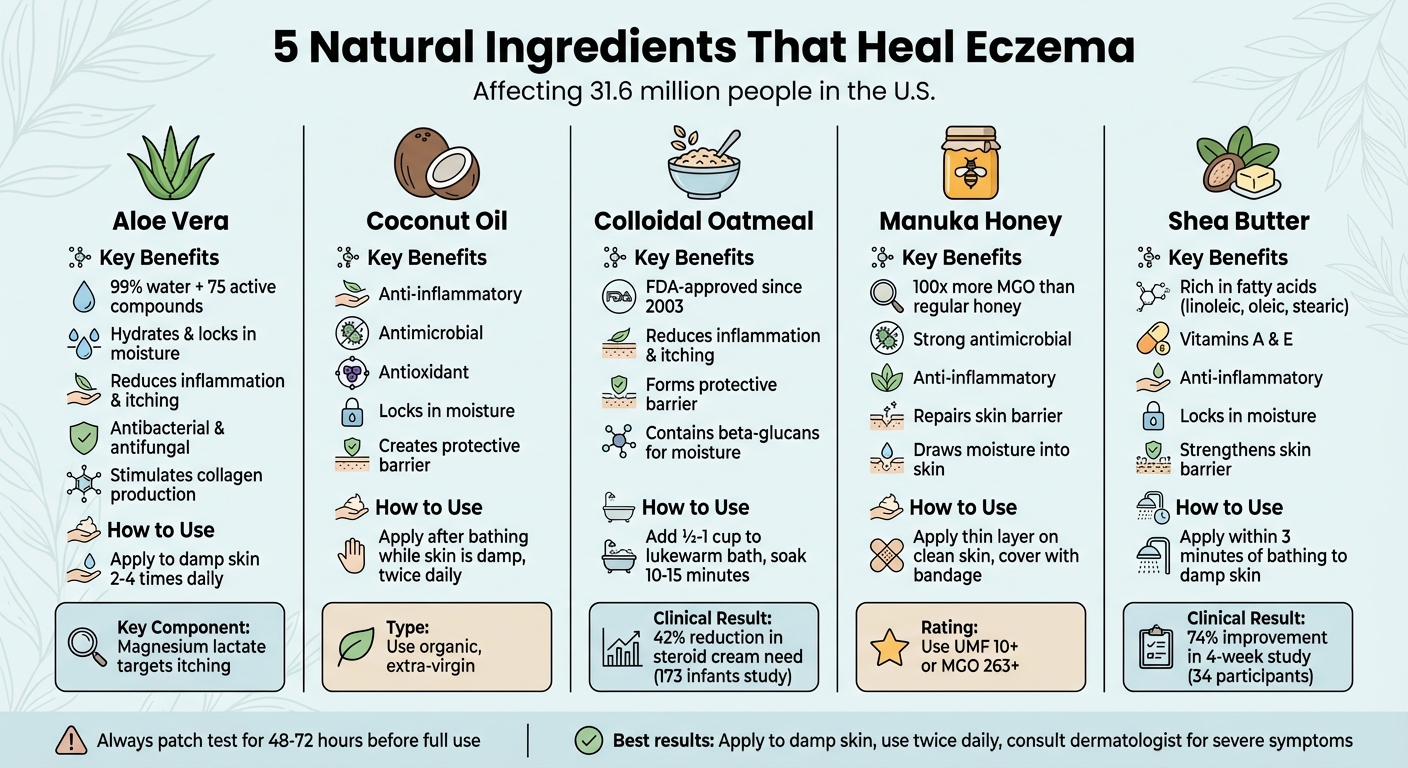
5 Natural Ingredients for Eczema Relief: Benefits and Application Guide
ENT Specialist Rates Natural Eczema Treatments
sbb-itb-2185835
1. Aloe Vera
Aloe vera, made up of 99% water and packed with mucopolysaccharides, zinc, and amino acids, is a powerhouse for hydrating dry, tight skin. Its gel acts as a humectant, which means it draws water into the skin and locks it in place, providing relief for those stubborn dry patches.
With over 75 active compounds, aloe vera is also known for its ability to calm inflammation. It works by regulating immune responses and reducing histamine levels, which are often responsible for that persistent itch. One standout component, magnesium lactate, specifically targets the chemical that triggers itching. The result? Less redness, swelling, and scratching. This multi-faceted approach helps restore the skin’s natural barrier over time.
Aloe vera also offers antibacterial and antifungal benefits, which are especially helpful for eczema-prone skin. It protects against secondary infections, like staph or yeast, that can occur when the skin barrier is weakened. On top of that, aloe stimulates collagen production, speeding up the healing of cracked or broken skin and reinforcing the skin’s defenses.
For safe use, try a patch test by applying a small amount twice daily for 7–10 days. Look for products where aloe is listed as the first ingredient, and steer clear of formulas containing alcohol or fragrances. For maximum hydration, apply aloe to damp skin right after bathing and massage it in two to four times daily.
If you’re allergic to plants in the Liliaceae family (like garlic, onions, or tulips), it’s best to avoid aloe vera. Also, skip oral consumption, as it can have laxative effects.
This gentle, skin-loving ingredient fits perfectly into a routine focused on pure, chemical-free solutions to bring your skin back into balance.
2. Coconut Oil
Coconut oil is known for its anti-inflammatory, antimicrobial, and antioxidant properties, making it a helpful option for managing eczema symptoms. Acting as a natural emollient, it creates a protective layer on the skin, locking in moisture and reducing water loss - especially important when the skin barrier is compromised. Its hydrating qualities can also ease the tight, uncomfortable feeling that often comes with dermatitis.
This oil has been a staple in Ayurvedic medicine for centuries, and modern studies confirm its skin-soothing benefits, particularly for children. For the best results, use organic, extra-virgin coconut oil. Apply it immediately after bathing, while your skin is still damp. Warm a small amount between your fingers until it liquefies, then gently press it onto the affected areas - be careful not to rub, as this can irritate sensitive skin further.
Coconut oil works best as the final step in your skincare routine to seal in other treatments and shield your skin from environmental irritants. For ongoing protection, apply it twice daily, especially after washing your hands or being exposed to cold weather. To boost its healing effects, you can mix it with natural ingredients like grass-fed beef tallow, which closely mimics the skin’s natural oils. This combination pairs well with tallow-based products, which are discussed later.
To keep your coconut oil clean and free from contamination, use a small spoon or spatula when scooping it out of the container. If your skin is particularly sensitive, do a patch test on a small area, like the inside of your elbow, for several days before using it more widely. For additional safety tips, refer to the "How to Use Natural Ingredients Safely" section.
3. Colloidal Oatmeal
Colloidal oatmeal, a finely ground oat powder, has been recognized by the FDA since 2003 as an effective over-the-counter skin protectant. Its unique processing allows it to stay suspended in water, ensuring even application on the skin. This ingredient is packed with avenanthramides - plant compounds that help reduce inflammation by blocking the release of inflammatory chemicals. The result? Less redness and a calmer urge to scratch.
"Oats have polyphenols called avenanthramides, which have natural antioxidant and anti-inflammatory benefits that help to diminish feelings of itchiness and discomfort." – Morgan Maier, PA-C, Dermatology Physician Assistant, Seattle Children's
Colloidal oatmeal also contains starches and beta-glucans, which draw moisture to the skin, while its lipids reinforce the skin's natural barrier to combat dryness. It forms a protective layer on the skin's surface, locking in hydration and shielding against irritants - features especially helpful for eczema-damaged skin.
One clinical study involving 173 infants with moderate to severe atopic dermatitis found that using a colloidal oatmeal emollient reduced the need for high-potency steroid creams by 42%.
Incorporating colloidal oatmeal into a skincare routine is straightforward. Add ½ to 1 cup to lukewarm bathwater (around 100°F) and soak for 10–15 minutes. You can even make your own by grinding plain, uncooked oats into a fine powder using a food processor. To test if it’s ready, stir 1 tablespoon into water - if the water turns milky white, you’re good to go.
After soaking, gently pat your skin dry and immediately apply a fragrance-free moisturizer or grass-fed tallow balm to seal in hydration. For targeted relief, mix a small amount of colloidal oatmeal with water to create a paste and apply it to the affected area for 15–20 minutes.
A large-scale safety study involving 445,820 participants over three years reported zero allergic reactions to colloidal oatmeal, highlighting its gentle nature. If you have sensitive skin, perform a patch test by applying a small amount to your forearm and waiting 24–48 hours before wider use. This simple yet effective ingredient pairs well with other natural remedies to soothe and protect eczema-prone skin.
4. Manuka Honey
Manuka honey stands apart from regular honey thanks to its high levels of methylglyoxal (MGO) - up to 100 times more than what's found in conventional honey. This elevated MGO content gives it strong antimicrobial properties, helping to protect against infections. It also acts as a humectant, drawing moisture into the skin and soothing irritation.
Its anti-inflammatory qualities help calm redness and discomfort, while also aiding in repairing a compromised skin barrier by integrating into the skin's lipid matrix. To get the most out of it, opt for medical-grade Manuka honey with a UMF of 10+ or an MGO rating of 263 or higher.
"Raw, unfiltered honey (naturally antibacterial and soothing)" – Cattle + Comb
For application, spread a thin layer on clean, affected skin after bathing and cover it with a sterile bandage for several hours or overnight. This allows the honey to penetrate deeply and promote faster healing. If you're looking for a daily option, consider balms that combine honey with skin-friendly lipids like grass-fed beef tallow. These balms reduce the stickiness of pure honey while mimicking the skin's natural sebum.
"The raw honey soothes and complements the fatty-acid profile" – CC Staff, Conners Clinic
To maximize results, apply Manuka honey first to hydrate the skin, then follow up with a tallow balm to lock in moisture and support the skin's natural lipid barrier. This combination not only enhances the honey's benefits but also ties in seamlessly with the use of tallow-based products discussed later. Always patch test on your inner forearm for 24–72 hours before using it more broadly.
5. Shea Butter
Shea butter, derived from the nuts of the shea tree, is well-known for its anti-inflammatory and moisturizing properties, making it a go-to for eczema-prone skin. It's rich in linoleic, oleic, and stearic acids - key fatty acids that strengthen your skin's natural barrier, helping it fend off external irritants. Plus, it contains vitamins A and E, which support skin repair and offer antioxidant protection against environmental stressors.
Its emollient nature forms a protective layer over the skin, locking in moisture and reducing transepidermal water loss - an essential function for managing eczema-damaged skin. Research backs this up: in a 4-week study involving 34 participants with eczema, 74% reported improvements after using a cream with shea butter extract. Another study showed that shea butter reduced eczema severity from grade 3 to grade 1, outperforming petroleum jelly, which only reduced it to grade 2.
"Raw shea butter... is full of all-natural vitamin A, works as an anti-inflammatory and aids in numerous skin conditions." – Dr. Axe
To maximize its benefits, apply shea butter within three minutes of bathing while your skin is still damp - this helps seal in hydration. Opt for raw or unrefined shea butter to retain its natural healing properties, and steer clear of products with added fragrances or harsh chemicals that could trigger flare-ups. If you're using prescription creams, apply them first, let them absorb, and then layer shea butter on top to lock in the treatment. This method aligns with the approach of using tallow-based moisturizers, which also focus on strengthening the skin's barrier.
For even better results, consider combining shea butter with other barrier-repairing ingredients. Pair it with a grass-fed beef tallow moisturizer or tallow balm to boost hydration and restore the skin's lipid matrix. This combination provides the deep moisture that eczema-prone skin needs on a daily basis.
How to Use Natural Ingredients Safely
Before trying any natural ingredient on eczema-prone skin, it's important to do a patch test. Apply a small amount of the product to a small area like your inner forearm, wrist, or behind your ear. Repeat this twice daily for 48–72 hours to check for delayed reactions. If you notice redness, itching, stinging, burning, or swelling, stop using the product immediately. Make sure to test only on intact skin. This step helps ensure the product is safe and beneficial for your skin.
When selecting products, stick to minimalist formulas with fewer additives. This makes it easier to identify potential triggers. Start with options that are fragrance-free and do not contain essential oils, as these can sometimes cause contact dermatitis. Look for quality labels like "grass-fed" for animal-based ingredients or "organic" and "cold-pressed" for botanical oils to minimize exposure to pesticides and chemicals. After a lukewarm bath, apply natural emollients like beef tallow moisturizer or tallow balm to damp skin to help seal in moisture.
"Use occlusive layers only on intact skin; avoid open or infected areas and seek medical assessment if redness, pain, oozing, or spreading occurs." - CC Staff, Conners Clinic
Professional guidance is also key. If you experience frequent flares, widespread inflammation, or symptoms like oozing, crusting, or spreading redness, consult a dermatologist. It's especially important to discuss any plans to replace prescribed medications - like topical steroids - with natural alternatives, particularly for children. If you have a history of allergies or conditions such as alpha-gal syndrome, seek advice before using animal-derived products like grass-fed tallow balm.
To prevent contamination in preservative-free products, always use a clean spatula or spoon to remove tallow balm from jars rather than your fingers. This simple step extends the product's shelf life and ensures your natural skincare remains safe and effective. Taking these precautions can enhance the healing benefits of natural treatments for eczema.
Conclusion
Managing eczema calls for a steady and consistent approach. This review of natural ingredients highlights the importance of nourishing your skin with clean, chemical-free options. The five natural ingredients we discussed - aloe vera, coconut oil, colloidal oatmeal, Manuka honey, and shea butter - offer layered benefits for compromised skin. They hydrate, soothe, and lock in moisture, creating a barrier against irritants.
These ingredients also help restore essential fatty acids and vitamins that mimic your skin's natural oils, promoting cellular repair and overall skin health. As the Conners Clinic explains, "Strengthening the skin barrier - your first line of defense - is central to everyday care."
It's important to remember that natural remedies take time. These ingredients are designed for long-term nourishment and resilience, with noticeable improvements often appearing after 2 to 6 weeks of consistent use. For best results, apply your chosen products to damp skin right after bathing, use them at least twice daily, and patch test new products for 48–72 hours to avoid irritation. This gradual approach helps build a stronger foundation for your skin.
If you're looking for an extra boost, consider adding grass-fed tallow balm to your routine. With a fatty acid profile that closely resembles human sebum, tallow balm supports effective barrier repair while delivering deep, lasting hydration. A tallow moisturizer or tallow balm for dry skin offers occlusive protection without relying on synthetic additives or harsh chemicals - perfect for eczema-prone skin.
Interested in trying this natural solution? Join the waitlist for our upcoming tallow skincare launch and take the first step toward gentle, effective relief for your skin.
FAQs
Can I use these ingredients with prescription eczema creams?
Yes, natural ingredients such as colloidal oatmeal, coconut oil, honey, and aloe vera gel are generally considered safe to use with prescription eczema creams. That said, it’s always a good idea to check with your healthcare provider first. They can confirm whether these ingredients will work well with your prescribed treatment and ensure there won’t be any unwanted interactions.
Which ingredient is best for infected or oozing eczema?
Calendula and rosehip are excellent choices for dealing with infected or oozing eczema. Known for their calming and anti-inflammatory benefits, they help ease irritation, soothe the skin, and encourage its natural healing process. These ingredients are both mild and effective, making them perfect for aiding skin recovery in delicate areas.
How do I add a grass-fed tallow balm to this routine?
To incorporate grass-fed tallow balm into your skincare routine, start by thoroughly cleansing your skin. Once clean, take a small amount of the balm and gently massage it into any dry or irritated areas until fully absorbed. For optimal hydration, apply it right after bathing to help seal in moisture.
This balm is known for its ability to deeply nourish the skin, as it closely resembles the natural oils your skin produces. It can also support the restoration of your skin’s barrier. Use it whenever needed, particularly during times of irritation or dryness, and make sure to choose a product that is pure and free from additives for the best results.