
Grass-Fed Tallow vs Regular Tallow: Key Differences
Grass-fed tallow and regular tallow differ primarily in how they are sourced and their nutrient content, which impacts their effectiveness in skincare. Grass-fed tallow comes from cattle raised on pasture and offers higher levels of vitamins (A, D, E, and K), omega-3 fatty acids, and conjugated linoleic acid (CLA). Regular tallow, sourced from grain-fed cattle raised in feedlots, is more affordable but has lower nutrient density and a higher omega-6 content, which may promote inflammation.
Here’s what you need to know:
- Grass-Fed Tallow: Higher in nutrients, better for sensitive skin, absorbs well, and has a creamy yellow color due to beta-carotene.
- Regular Tallow: Affordable, basic hydration, lower in nutrients, and often processed at high heat, which reduces vitamin content.
- Key Differences: Nutrient density, fatty acid composition, purity, and production methods.
Quick Comparison
| Feature | Grass-Fed Tallow | Regular Tallow |
|---|---|---|
| Cost | Higher (30–50% more expensive) | More budget-friendly |
| Nutrient Content | High in vitamins and CLA | Lower in nutrients |
| Omega-3:6 Ratio | Balanced (~1:3) | Imbalanced (~1:20 or higher) |
| Color | Creamy/yellow (beta-carotene) | Bright white |
| Purity | Free of hormones/antibiotics | May contain residues |
| Skincare Benefits | Soothes inflammation, hydrates deeply | Basic hydration |
Grass-fed tallow is ideal for those seeking nutrient-rich, natural skincare, while regular tallow offers a cost-effective option for basic moisture.
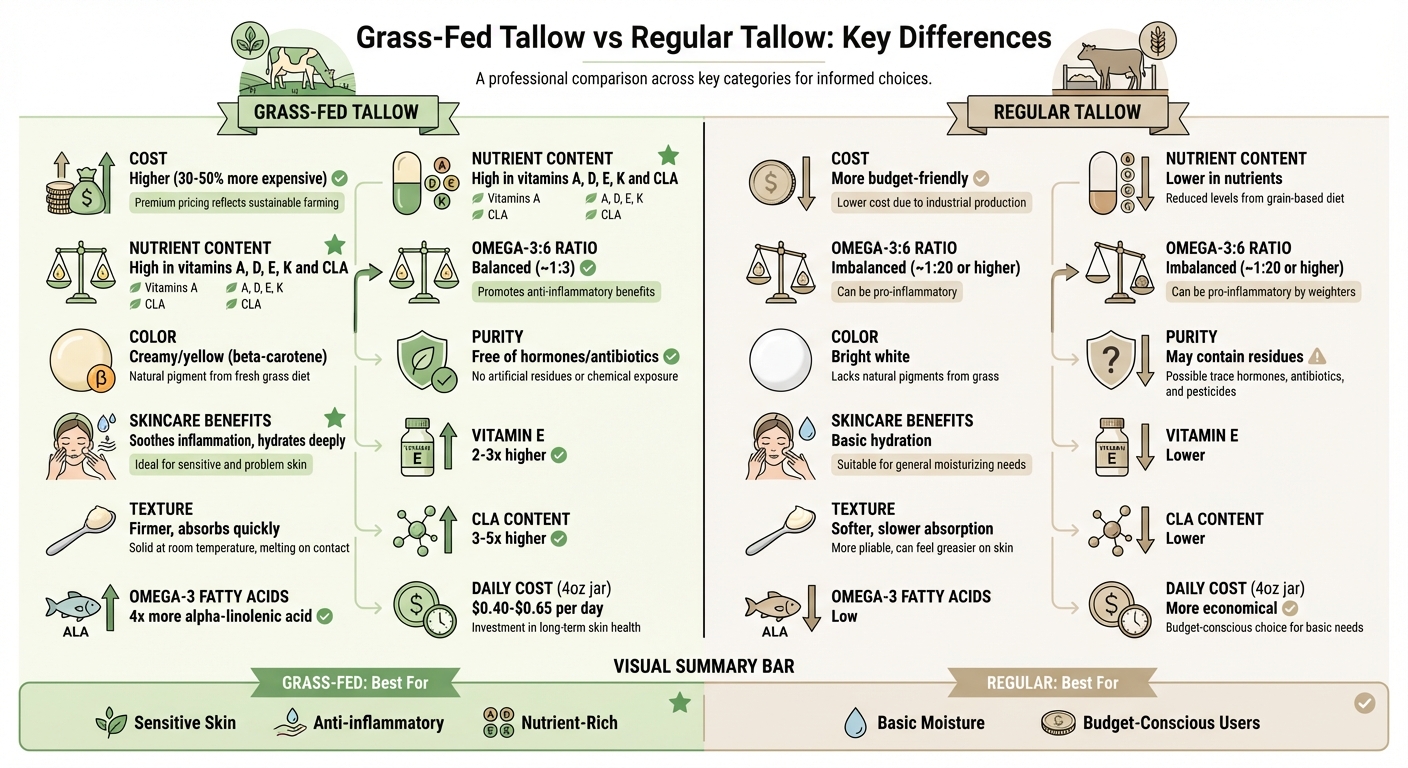
Grass-Fed vs Regular Tallow: Complete Nutrient and Feature Comparison
Making Tallow Moisturizer From Beef Fat - Entire Process Start to Finish
sbb-itb-2185835
What is Grass-Fed Tallow?
Grass-fed tallow is the rendered fat from cattle raised on pasture, where a natural grass diet enhances its nutrient profile. This method of raising cattle plays a key role in creating a product that stands out for its nutritional benefits.
The gold standard for grass-fed tallow comes from "grass-finished" cattle - animals that eat grass throughout their entire lives, with no grain introduced at any stage. For skincare purposes, the tallow is typically sourced from suet, a highly nutrient-rich fat found around the kidneys and loins. Interestingly, each cow produces only about 12 pounds of suet, making it much scarcer than the more common trim fat.
One noticeable feature of grass-fed tallow is its creamy, yellowish color, a result of the beta-carotene naturally present in grass diets. This contrasts with the stark white appearance of grain-fed tallow or tallow processed in ways that strip away beneficial compounds.
Another important distinction is the purity of grass-fed tallow. It avoids the growth hormones and routine antibiotics that are often part of feedlot operations. Additionally, it is usually dry-rendered or processed at low temperatures, which helps retain heat-sensitive vitamins like A, D, E, and K.
It's worth noting that about 85% of the grass-fed beef available in the U.S. is imported, with major suppliers including Australia, Uruguay, and Argentina. For those who prefer domestically sourced products, checking the origin of your grass-fed tallow is essential. These unique characteristics set grass-fed tallow apart, making it a standout choice compared to regular tallow, as we’ll explore further in the next sections.
What is Regular Tallow?
Regular tallow, often referred to as conventional tallow, is made from the rendered fat of cattle raised in intensive feedlot systems. These cattle are primarily fed a diet of corn and soy, and they are commonly treated with antibiotics and synthetic growth hormones. They typically reach processing age in just 12–14 months.
One noticeable feature of regular tallow is its stark white color. This is due to the lack of beta-carotene, which is present in grass-fed diets but absent in grain-based feed. Additionally, the grains used in conventional feed are often treated with pesticides, which can leave trace residues in the fat.
The nutritional makeup of regular tallow mirrors these farming practices. For example, the omega-3 to omega-6 ratio in grain-fed beef fat is roughly 1:20 or higher. This imbalance makes it more pro-inflammatory compared to the healthier 1:3 ratio found in grass-fed tallow. Regular tallow also contains significantly lower levels of essential nutrients like Conjugated Linoleic Acid (CLA) - 3 to 5 times less - and up to four times less Vitamin E than its grass-fed counterpart.
Another factor to consider is how regular tallow is sourced and processed. It is often derived from "trim fat", which includes red meat, gristle, and connective tissue, rather than the pure kidney suet used in higher-quality products. The high-heat rendering methods used in its production can destroy heat-sensitive nutrients, further impacting its nutritional value.
These production methods make regular tallow more affordable, usually costing 30% to 50% less than grass-fed options. This affordability, however, comes with trade-offs in quality and nutrition, which will be explored further in the next section.
How Sourcing and Production Methods Differ
The way grass-fed and regular tallow are produced sets them apart, particularly in terms of quality and overall impact.
Animal Diet and Farming Practices
Grass-fed cattle are raised on open pastures, feeding on grasses and plants that their digestive systems are naturally suited for. On the other hand, regular tallow typically comes from cattle raised in feedlots, where their diet consists mainly of grains like corn and soy. This grain-heavy diet is designed to speed up weight gain.
Feedlot systems often rely on hormones and antibiotics to maximize growth, and these substances can leave traces in the fat. These variations in diet and farming practices don’t just affect the nutritional makeup of the fat - they also influence broader environmental and ethical considerations.
Environmental and Ethical Factors
Pasture-based farming works in harmony with nature, often improving soil health and even helping to capture carbon when managed well. In contrast, feedlot systems, also known as Concentrated Animal Feeding Operations, generate large amounts of waste and depend on chemical inputs, offering none of the environmental benefits of regenerative grazing.
This connection to the land and natural cycles is reflected in the quality of grass-fed tallow, which is often sought after for its purity and nutrient-rich profile, especially in skincare products.
Ethics play a role too. Grass-fed cattle live in open, natural environments, where they can engage in behaviors that align with their instincts. Feedlot cattle, however, are confined to crowded spaces, a condition that raises concerns for many consumers who prioritize humane farming practices when choosing products.
Nutrient Profile Comparison
The nutritional differences between grass-fed and grain-fed tallow come down to the diets of the cattle. Cattle raised on natural pastures develop fat with higher levels of fat-soluble vitamins and essential fatty acids. In contrast, grain-fed cattle - typically fed corn and soy - produce fat with a lower nutrient density.
For instance, grass-fed tallow contains four times more omega-3 alpha-linolenic acid and boasts an omega-6 to omega-3 ratio of 1.4, compared to a much higher ratio of over 16 in grain-fed tallow. This difference is crucial for managing inflammation.
Another standout nutrient is Conjugated Linoleic Acid (CLA). Grass-fed tallow contains three to five times more CLA than its grain-fed counterpart. Additionally, it delivers two to three times more vitamin E.
The color of grass-fed tallow - often cream or yellowish - reflects its elevated beta-carotene and vitamin A levels, both of which are beneficial for cell turnover and collagen production. It also contains higher amounts of vitamins D and K2, which play a role in skin cell regulation and elasticity.
These nutritional differences make grass-fed tallow a standout choice for skincare, particularly for addressing dryness and sensitivity.
Nutrient Comparison Table
| Nutrient | Grass-Fed Tallow Level | Regular Tallow Level |
|---|---|---|
| Omega-3 Fatty Acids | High | Low |
| Conjugated Linoleic Acid (CLA) | High | Low to Moderate |
| Vitamin A | High | Moderate |
| Vitamin D | High | Moderate |
| Vitamin E | High | Moderate |
| Vitamin K2 | High | Low |
This nutrient breakdown highlights why grass-fed tallow is often favored in skincare products designed to nourish and support the skin.
Differences in Fatty Acid Composition
The fatty acid makeup of grass-fed tallow is quite different from that of grain-fed tallow, and this difference plays a key role in how each impacts the skin. Grass-fed tallow boasts a balanced omega-3 to omega-6 ratio of about 1:3, while grain-fed tallow often skews heavily toward omega-6, with ratios exceeding 1:20. This imbalance matters because omega-6 fatty acids, when consumed or applied in excess, can promote inflammation, while omega-3s are known to calm inflammation and aid in repairing the skin barrier. These contrasting profiles explain why grass-fed tallow is better suited for reducing skin inflammation.
Grain-fed tallow, influenced by diets rich in corn and soy, contains significantly higher levels of omega-6 fatty acids. This imbalance can aggravate inflammation in the skin, particularly for those prone to conditions like eczema, rosacea, or chronic redness. Such an unbalanced fatty acid profile may compromise the skin's ability to retain moisture and defend against irritants, potentially worsening inflammatory responses. For individuals seeking relief from sensitive or irritated skin, this can make grain-fed tallow a less effective option.
Grass-fed tallow, on the other hand, offers much higher levels of Conjugated Linoleic Acid (CLA) - up to 3 to 5 times more than grain-fed tallow. CLA is a fatty acid celebrated for its anti-inflammatory and antimicrobial properties. It not only helps soothe inflammation but also supports skin elasticity and strengthens the skin's natural protective barrier. These qualities make grass-fed tallow particularly beneficial for sensitive or easily irritated skin.
Another advantage of grass-fed tallow lies in its compatibility with human sebum. Its fatty acid profile closely mirrors the skin's natural composition, allowing for better absorption of nutrients. This compatibility enhances the skin's ability to repair its barrier, retain moisture, and reduce inflammatory signals - all of which contribute to minimizing irritation and signs of premature aging.
Texture, Color, and Scent Differences
The physical traits of tallow - its texture, color, and scent - offer valuable insights into its quality and can directly impact how well it absorbs into the skin and performs as a moisturizer.
Color
Grass-fed tallow often has a creamy or yellowish hue, which comes from beta-carotene naturally present in the diet of grass-fed cattle. This subtle tint is a sign of its nutrient-rich origins. On the other hand, tallow from grain-fed cattle is typically bright white. This difference occurs because corn and soy-based feeds lack the pigments found in grass-fed diets. A pale yellow or cream shade suggests a more natural and nutrient-dense product, while a stark white color might signal grain-fed sourcing or heavy processing.
Texture
Grass-fed tallow tends to have a firmer consistency and absorbs more efficiently into the skin. Its higher oleic acid content helps it penetrate deeply, providing hydration without leaving a greasy residue. In contrast, grain-fed tallow is often softer in texture but can feel heavier on the skin, taking longer to absorb.
Scent
The scent of tallow also reveals its quality. Grass-fed tallow typically has a mild, clean aroma, often described as neutral or slightly buttery. Lower-quality tallow, especially from grain-fed sources, can have a stronger, less pleasant odor. Over-processing to mask these odors may also strip away some of tallow's beneficial nutrients.
These sensory characteristics - color, texture, and scent - are more than just surface details. They reflect the nutritional and structural qualities of the tallow. When choosing a tallow-based balm or moisturizer, look for a light yellow hue, smooth texture, and gentle scent to ensure you're selecting a product that will nourish your skin effectively and naturally.
Skincare Benefits of Grass-Fed Tallow
Grass-fed tallow is a standout ingredient in balms and moisturizers because its molecular structure is so similar to human sebum. This allows it to absorb deeply into the skin, providing long-lasting hydration without leaving a greasy residue.
It’s also packed with fat-soluble vitamins A, D, E, and K, which are easily absorbed and support skin repair and protection. The elevated levels of conjugated linoleic acid (CLA) in grass-fed tallow add anti-inflammatory properties, making it especially beneficial for soothing irritated skin .
"Giving your skin tallow is like handing it a building block it already knows how to use, rather than a foreign chemical it has to struggle to understand." – Wild Tallow
Another key advantage is its purity. High-quality grass-fed tallow balms are anhydrous, meaning they don’t contain water. This eliminates the need for synthetic preservatives like parabens or harsh emulsifiers, which can irritate sensitive skin. Instead, you’re applying concentrated nourishment free from the agricultural residues, growth hormones, and antibiotics often found in conventional grain-fed sources.
These nutrient-rich properties make grass-fed tallow particularly effective for addressing dry and sensitive skin concerns.
Benefits for Dry and Sensitive Skin
Grass-fed tallow’s nutrient profile not only aids in skin repair but also helps calm inflammation, making it an excellent choice for dry or sensitive skin. Its balanced fatty acid composition - unlike the pro-inflammatory imbalance found in grain-fed tallow - makes it ideal for reducing irritation associated with conditions like eczema, psoriasis, dermatitis, and rosacea.
With nearly 50% saturated fat, its composition closely resembles human skin cell membranes. This similarity strengthens your lipid barrier, helping to lock in moisture while protecting against external irritants. Unlike petroleum-based products that sit on the skin’s surface, tallow penetrates deeply, delivering essential fatty acids like oleic, palmitic, and stearic acids for true hydration and barrier repair.
For those with sensitive skin, the absence of synthetic fragrances, alcohols, and chemical additives reduces the risk of irritation. Additionally, palmitoleic acid - a natural antimicrobial present in both grass-fed tallow and human sebum - enhances the skin’s protective barrier. Many users report that tallow soothes their skin when other products fail.
Using Grass-Fed Tallow on Your Face
Incorporating grass-fed tallow into your facial routine is simple and effective.
Despite its rich nutrient content, grass-fed tallow absorbs quickly into facial skin. Its higher oleic acid content ensures it penetrates deeply without leaving a heavy or greasy feel. With a comedogenic rating of 2 - similar to jojoba oil - it’s unlikely to clog pores for most people.
You only need a small amount. Warm a pea-sized portion between your fingertips to soften it, then gently press it into clean, slightly damp skin. This technique helps lock in moisture and ensures even absorption without pulling or tugging on delicate areas.
For best results, use water-based serums like Vitamin C or Hyaluronic Acid first, then apply grass-fed tallow as the final step. The tallow forms an occlusive barrier, sealing in the active ingredients while delivering its own nourishing vitamins and fatty acids. If you have oily or acne-prone skin, perform a 24-hour patch test on your inner arm before applying it to your face.
High-quality grass-fed tallow balms typically have a creamy or yellowish tint from beta-carotene and a mild, neutral scent - signs of minimal processing and preserved nutrients. Store your balm in a cool, dry place away from sunlight, and it can last up to a year without refrigeration.
Join the waitlist for our upcoming tallow skincare launch.
Cost and Value Comparison
Grass-fed tallow comes with a noticeable price difference, costing 30–50% more than conventional grain-fed options. For instance, a 4oz jar of grass-fed tallow is typically priced at $35–$40, while grain-fed tallow is more budget-friendly.
This higher cost reflects several important factors. Grass-fed cattle take longer to mature - 18–24 months compared to 12–14 months for grain-fed cattle. Additionally, raising cattle on pasture requires more resources and care. Premium brands also prioritize using pure kidney suet, the most nutrient-rich fat, which yields only about 12 pounds per cow.
"High-quality skincare starts with high-quality sources, and this rapidly growing market has attracted plenty of people looking to make quick money without understanding quality standards." – Stefan, Rancher, Rancher's Render
When looking at daily costs, the numbers tell an interesting story. A 4oz jar of grass-fed tallow balm lasts 2 to 3 months with regular use, averaging $0.40 to $0.65 per day. Compare that to high-end conventional moisturizers, which can cost $100 to $200 for just 1.7oz, translating to a daily cost of $1.50 to $3.00. From this perspective, grass-fed tallow offers a strong value for its price.
Nutrient content is another major factor. Grass-fed tallow contains 2 to 4 times more Vitamin E and 3 to 5 times more CLA (conjugated linoleic acid) than grain-fed versions. This higher nutrient density not only justifies the price but also enhances its effectiveness as a moisturizer, especially for dry or sensitive skin. The increased levels of anti-inflammatory and antioxidant compounds mean you can use less product while achieving better results. Ultimately, the higher price reflects the superior quality and nutrient profile, which we’ll explore further in the following pros and cons comparison.
Pros and Cons Comparison
Here’s a side-by-side look at how grass-fed tallow stacks up against conventional grain-fed tallow:
| Feature | Grass-Fed Tallow | Regular (Grain-Fed) Tallow |
|---|---|---|
| Cost | Higher (30–50% premium) | More affordable |
| Nutrient Density | Rich in Vitamins A, D, E, K2, and CLA | Lower in Vitamin E and CLA |
| Fatty Acid Profile | Balanced Omega-3:6 ratio (~1:3) | High Omega-6; potentially pro-inflammatory (~1:20+) |
| Purity | Free of added hormones, antibiotics, and pesticides | May contain chemical residues stored in fat |
| Texture & Absorption | Lighter, absorbs quickly | Heavier, slower absorption |
| Color | Creamy or yellowish (from beta-carotene) | Bright white |
| Skincare Benefits | Anti-inflammatory, antioxidant-rich | Basic hydration and barrier support |
| Daily Cost (4oz jar) | $0.40–$0.65 per day | More economical per day |
Conclusion
Grass-fed tallow and regular tallow offer distinct differences in both their nutritional content and benefits for skin care. Grass-fed tallow stands out as more than just a moisturizer - it’s a nutrient-rich treatment packed with higher levels of CLA and Vitamin E. Its Omega-3 to Omega-6 ratio, roughly 1:3 compared to the 1:20 or higher ratio in grain-fed tallow, makes it especially suitable for dry, sensitive, or reactive skin while leaving behind fewer residues. This nutritional edge justifies its higher price.
While grass-fed tallow costs about 30 to 50% more than regular tallow, it remains a cost-effective alternative to many premium moisturizers that often include synthetic additives. Thanks to its dense nutrient profile, users can achieve better results using smaller amounts.
The benefits of pure, naturally sourced tallow are hard to ignore. If you’re curious to see how nutrient-dense tallow can transform your skin, consider joining the waitlist for our upcoming Pure Skin Tallow launch. We’re dedicated to using only the finest grass-fed suet and rendering it with care to ensure every beneficial compound is preserved, just as nature intended.
FAQs
How can I tell if a tallow balm is truly grass-finished?
To confirm that a tallow balm is genuinely grass-finished, verify that it comes from cattle raised entirely on pasture, feeding on grass throughout their lives without any grain or feedlot supplementation. Look for labels or descriptions that specify “grass-fed and grass-finished” and mention regenerative farming methods. Brands that openly share details about their farming practices - such as avoiding grain feeding or the use of hormones - are more likely to offer a product with the purity and nutrient quality you want for your skincare.
Will grass-fed tallow clog pores or trigger breakouts?
Grass-fed tallow is gentle on the skin and unlikely to clog pores or trigger breakouts. Its composition is similar to the skin's natural oils, which helps maintain a healthy skin barrier. This makes it a soothing and non-irritating choice for a variety of skin types.
What should I look for when buying a tallow moisturizer?
When picking a tallow moisturizer, focus on grass-fed tallow that’s packed with nutrients like omega-3s, CLA, and vitamin E - key components for healthy skin. Make sure it comes from pasture-raised cattle that haven’t been treated with antibiotics or hormones. Opt for products processed using traditional methods to maintain purity. Look for labels highlighting grass-fed, organic, and minimally processed ingredients to ensure you’re using a natural product that truly cares for your skin.